
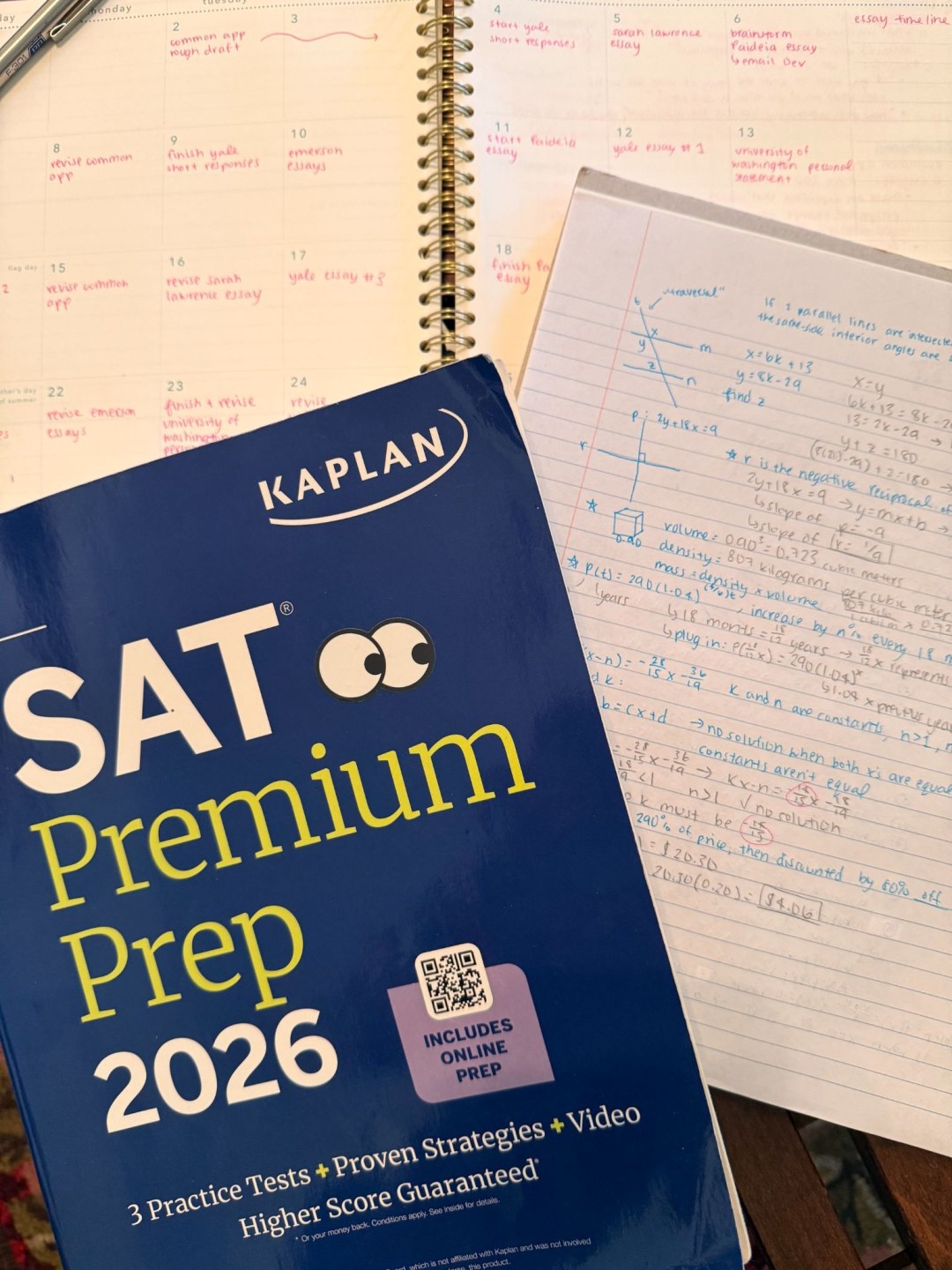
Post by Nora Brayer, Class of 2027
The SAT is one of the most daunting and undiscussed components of the college process. Should I take the SAT? If so, when? If so, should I prepare? If so, how do I prepare? Having taken the SAT just last Saturday and having formulated a study routine, not without flaws of course, I will do my best to guide you through the process.
Step One: Should you take it? Many schools are currently “test-optional” or “test blind” (including the UC system) meaning they don’t require standardized tests (including the SAT), or they can be submitted if desired. Because not all schools will see your test scores, there is some debate over whether or not the test should be taken. To this I say that you might as well give it your all and see how you do. After all, you may end up wanting to apply to a university that requires the test (such as Ivy Leagues and many public university systems), and a good score would be the perfect boost. Doing this gives one a competitive edge and can increase your chances of admission.
Cost is another factor to consider when taking the SAT. College Board does offer financial aid to many families, causing the cost to be free. If you qualify for free or reduced lunch, then the test won’t cost a thing. However, if you don’t, prepare to spend $68 in order to take it. Budgeting is an essential part of the college process– if your family doesn’t qualify for financial aid, college applications themselves cost between $60-$80 a piece. This being said, if you are considering competitive colleges, it is strongly recommended to talk to your parents/guardians about your ambitions and how to meet them. We will discuss scholarships and financial aid in the future!
Step Two: When should you take it? For freshmen, sophomores, and juniors, the PSAT (or practice SAT) is available to take in the fall of any year. If you are currently an incoming junior, it is standard to take it at the end of your junior year and the beginning of your senior year. If you are a senior (and haven’t already taken the test), there are testing dates in August-December. Note that if you intend to apply for early decision to a certain school, due dates can be in late fall (Nov-Dec), so I suggest taking an earlier date.
Signing up in the first place is another hurdle that receives a lot of confusion, given that our school doesn’t put emphasis on when or where to do so. Luckily, the College Board website has its own page in which you can both register and view future testing dates. (SAT Registration) Note that the application is rather long and requires a portrait picture of yourself for identification.
Step Three: How should I prepare? Because the SAT has been a part of student culture for decades, there seems to be a lot of hype around studying. For me at least, I see a montage of Legally Blonde where Elle Woods is studying to get into Harvard. And, now having taken it, her efforts are valid. Though the first section of both math and reading are not prohibitively difficult, and can leave someone who hasn’t studied with a sense of accomplishment. However, come the second section, the questions can easily take a drastic turn to barely intelligible English and extremely advanced algebra. Studying just a small fraction of the material actually helped a lot, and the question structures from practice exams aligned with the actual test.
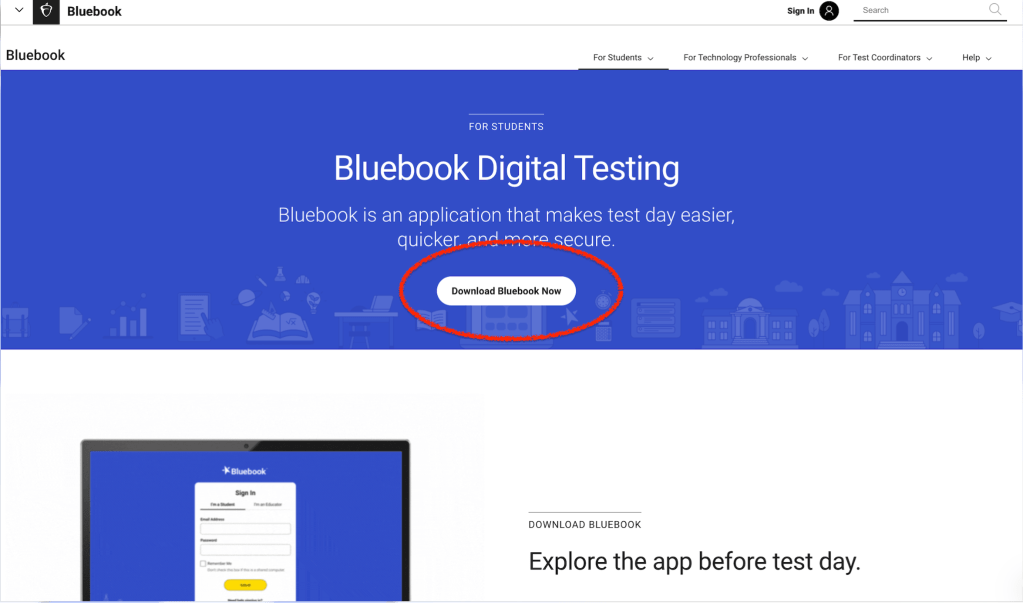
So where do you begin? I used the Bluebook app to take practice tests (there are about 5). Once you finish one of them, College Board will automatically score you, break down the answer to every question, and give targeted practice based on your results. (Access through this link: Full-Length SAT Suite Practice Tests) I took notes and wrote down the process to the questions I missed in a notebook, and was able to internalize new math material and grammar structures.
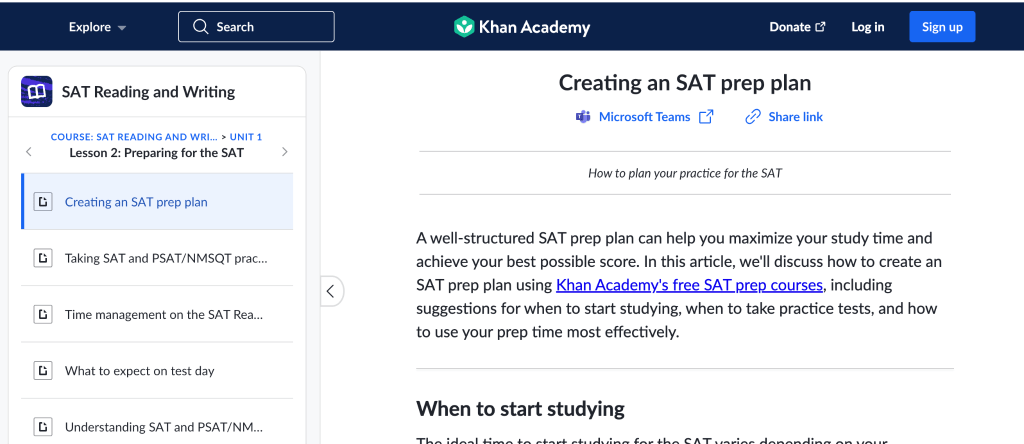
Khan Academy is another great resource, and has videos and practice that will walk you through all the material you need to know to understand the test.
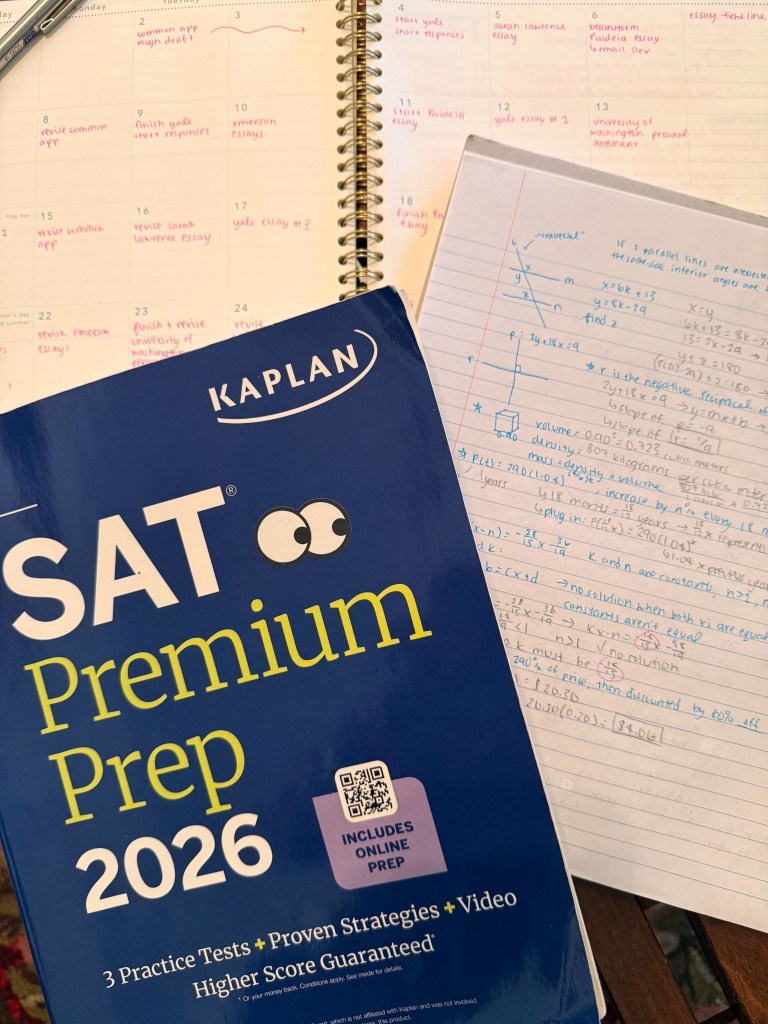
If you prefer physical reading and writing, you can purchase a practice book at Barnes & Noble, or order online, where they also teach the material and offer practice tests. I recommend creating a weekly/monthly study plan so that you hold yourself accountable to actually practice.
According to NYU representative Jimmy Suarez, you should only submit scores if your results are above average, or you are at the 90th percentile or above. Doing this gives one a competitive edge and can boost your chances of admission. Submitting a mediocre or below average score can do the opposite, and perhaps undermine the advanced coursework on your transcript.
Step Four: The day of & day before the exam: As is for any test, it is important to get good rest and not over-study the day before. The exam is about 2.4 to 3 hours long, so it takes considerable mental endurance, especially to perform well under time pressure. You also need to check in through Bluebook the night before in order to receive your admissions ticket. You can either print it out or have it emailed to you so that it is easily accessible on your exam day. You will also need to have your school or personal ID ready on testing day. The campus where the exam is will likely be unfamiliar, so be prepared to interact with proctors and navigate your way around. You will be testing with students from all over our district and beyond as well!
Once you begin your SAT, it will be over in a flash and results will be posted around two weeks after. Unless you are a senior testing in December, there are always other chances to retake if you are unsatisfied with your score. And if you are satisfied, congratulations! You succeeded at a very challenging task and should now party hard.

